
How ENT Clinics Can Improve Paediatric Examinations in Wriggling, Uncooperative Children

Providing effective ENT care for paediatric patients in the clinic setting can often be challenging. Anxiety, movement and limited cooperation may make traditional microscopic examinations and procedures difficult, particularly when working with young children who are unable to remain still throughout treatment.
As a result, many ENT clinicians are looking for ways to improve procedural flexibility, visualisation and patient comfort while reducing unnecessary referrals to theatre or examination under anaesthesia (EUA).
Paediatric ENT presentations such as impacted cerumen, otitis externa, ventilation tube review and foreign body removal frequently require precise visualisation within narrow anatomical spaces while managing a child who may be distressed or unable to remain still throughout treatment.
Clinical guidance from Perth Children’s Hospital highlights that successful foreign body and ear procedures in children depend heavily on:
- patient cooperation and immobilisation
- ability to visualise the ear canal
- operator experience
- appropriate equipment
- “good lighting preferably with a headlight” to allow two free hands during procedures.
While traditional microscopes provide excellent optics, they can present workflow limitations when children are distressed, fatigued or unable to tolerate fixed positioning. Even minor patient movement interrupts visualisation and requires repeated microscope adjustments and repositioning.
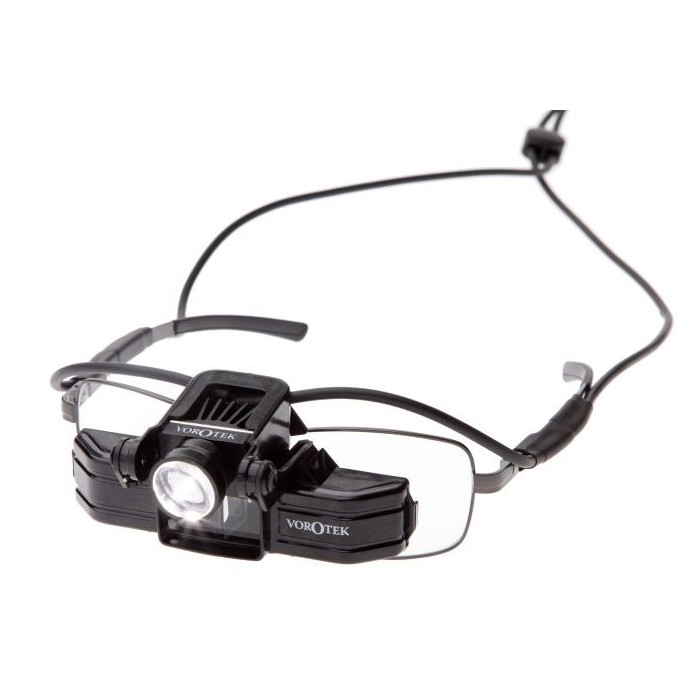
This challenge is something ENT clinician Cosette Audirac (Children’s Hospital of Orange County) has highlighted through her experience, which has been improved with the use of the VorOtek O Scope in paediatric clinical settings.

“The O’scope headlight has been truly transformative for performing in-clinic procedures in pediatric patients who are unable to remain still for traditional microscopic exams or interventions.”
Her experience reflects a growing clinical focus on mobility and ergonomic visualisation during paediatric procedures.
“It has allowed me to avoid sending many young children to the operating room for EUAs by providing effective, ‘mobile microscopy’ in the clinic setting.”
For clinicians working with young children, maintaining continuous visualisation while moving naturally with the patient is critically important, particularly when a child is seated on a parent’s lap or requires gentle reassurance during treatment.
Cosette also describes how mobility can influence procedural efficiency and clinician control during these situations.
“When a child requires gentle restraint by a parent, the O’scope allows me to move with the patient while maintaining continuous visualization, focus, and precise instrument control.”
This ability to maintain binocular visualisation and hands-free instrumentation while remaining mobile has proven results for clinicians during examinations, microsuction and foreign body removal procedures.
In contrast, fixed microscope positioning can become increasingly difficult when children are unable to remain still throughout treatment.
“Even small patient movements under a fixed microscope often require repeated scope adjustments and repositioning of the child, which is inefficient, time-consuming, and often unrealistic given limited cooperation and patient fatigue.”
The VorOtek O Scope is designed to support clinicians with binocular magnification, integrated coaxial illumination and ergonomic mobility during ENT examinations and procedures. Combining depth perception with clinician freedom of movement helps improve workflow flexibility while supporting procedural confidence in challenging paediatric settings.
As paediatric ENT care continues to evolve, clinicians are increasingly recognising that visualisation systems are not only about magnification they are also about mobility, ergonomic performance and creating a more adaptable experience for both practitioner and patient.
Frequently Asked Questions About Paediatric ENT Visualisation
Why are paediatric ENT procedures more difficult in clinic?
Children may struggle to remain still during examinations and procedures, making visualisation and instrumentation more challenging compared with adult patients.
Why is mobility important during paediatric ENT examinations?
Mobility allows clinicians to move naturally with the patient during examination and treatment, particularly when children are seated on a parent’s lap or unable to position comfortably at a traditional microscope.
What are the benefits of binocular vision in ENT procedures?
Binocular vision supports depth perception, which assists clinicians when working within narrow anatomical spaces such as the ear canal and nasal cavity.
Can improved visualisation support procedural confidence?
Enhanced magnification and illumination is proven to assist clinicians in visualising anatomical structures more clearly during examinations, microsuction and foreign body removal procedures.
Why are clinicians adopting head worn visualisation systems?
Head worn systems may provide ergonomic positioning, clinician mobility, hands-free instrumentation and consistent illumination during ENT examinations and procedures, improving both safe practice and work flow efficiency.
Explore the VorOtek O Scope for Paediatric ENT Procedures
The VorOtek O Scope is designed by ENT surgeon John Vorrath, to improve performance for paediatric ENT examinations and procedures with binocular magnification, coaxial illumination and freedom of movement in clinic environments.
To learn more about how the VorOtek O Scope may assist your paediatric ENT workflow, visit the VorOtek website or speak with the VorOtek team about real-world experiences using mobile visualisation in paediatric care.