
Why Anchoring to the patient is critical for safe ear wax removal with Dr Jan Romout ENT
Ear Wax Removal: Clinical Insights with Dr Jan Rombout, Episode 4.
In Episode 4 of our clinical education series, ENT Surgeon Dr Jan Rombout explains the role of anchoring during ear wax removal and microsuction, and why establishing a stable point of contact can help support instrument control and coordinated movement.
Anchoring is one of the key principles in the series, building on the importance of binocular vision, depth perception and straightening the ear canal.
What Is Anchoring During Ear Wax Removal?
Anchoring refers to establishing a stable point of contact for the hand or instrument hand during a procedure. In ear wax removal, this can help the clinician manage small, controlled movements while maintaining awareness of the instrument’s position relative to the ear anatomy.
Rather than relying on unsupported hand movements, an appropriate anchor can provide a reference point from which the clinician can pivot and coordinate their movements.
The exact position used will depend on the clinician’s technique, the patient’s anatomy and the procedure being performed.
Why Is Anchoring Important During Microsuction and Curettage?
The ear canal is a narrow anatomical space that requires careful visualisation and controlled instrument handling. During ear wax removal, the clinician needs to coordinate their view, hand position and instrument movement while remaining attentive to the patient’s position and response.
Anchoring can contribute to this coordination in several ways:
- Instrument control: A stable point of contact can help support deliberate, controlled movements.
- Hand coordination: It provides a reference point for coordinating the hand holding the instrument with the clinician’s visual field.
- Patient awareness: A clinician who maintains an appropriate point of contact can remain responsive to patient movement, adjusting their approach when necessary.
- Technique consistency: Practising a consistent approach to hand positioning can help clinicians develop familiarity with their instrument movements.
Anchoring is not a substitute for training, appropriate visualisation or clinical judgement. It is one element of a broader technique that must be adapted to the individual patient and clinical situation.

How Does Dr Jan Rombout Approach Anchoring?
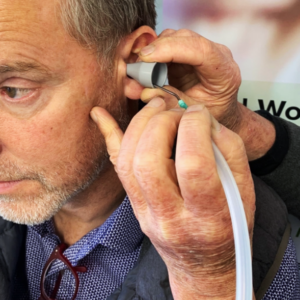
Dr Jan emphasises the importance of establishing good ergonomic and relaxed posture and a stable point of contact to support instrument control during ear wax removal.
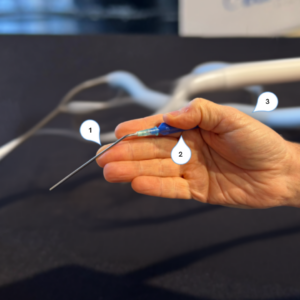
Depending on the technique being demonstrated (Dr. Rombout prefers an open hand position), this may involve supporting the hand near the patient’s ear, using an appropriate contact point behind the ear or against the cheek, or using a suitable point of support when working with a speculum, to your opposite hand.
The objective is to help control the instrument’s movement rather than allowing the working hand to move without a stable reference.
Anchoring should remain gentle and appropriate to the clinical situation. The clinician must maintain awareness of the patient’s comfort, the anatomy being treated and any movement that may affect the procedure.
The principle is simple: establish a relaxed position, an appropriate point of support, maintain clear visualisation and coordinate instrument movement with care.
The Relationship Between Visualisation, Access and Control
Anchoring does not work in isolation. It forms part of the wider technique explored throughout this clinical insight series.
1. Visualisation
The clinician needs a clear view of the ear canal and the area being examined or treated. Binocular vision provides depth perception, required for the clinician to interpret the spatial relationship between the instrument and the anatomy accurately.
2. Access
Appropriate positioning of the external ear can help improve access and visualisation into the ear canal. As discussed in Episode 3, Dr Jan describes straightening the canal before introducing a speculum as part of his approach.
3. Control
Once the clinician has established appropriate access and visualisation, anchoring can help support coordinated hand movements and instrument control.
Together, these considerations highlight why effective ear wax removal involves more than simply seeing the wax. The clinician must also understand the anatomy, position the patient appropriately and manage the instrument in a controlled manner.
Continue the Series
Previously:
Episode 1: Three key success factors for Ear Wax Removal
Episode 2: Why Binocular Vision and Depth Perception Matter for Ear Wax Removal
Episode 3: Why Straightening the Ear Canal is important during Ear Wax Removal
Next:
Episode 5: Why having both hands free is essential for safe ear wax removal
In the meantime you can follow these links for more information in relation to Direct Binocular Vision and Microsuction solutions for cerumen management.