
Why Straightening the Ear Canal is important during Ear Wax Removal with Dr Jan Romout ENT
Ear Wax Removal: Clinical Insights with Dr Jan Rombout, Episode 3
In Episode 3 of Ear Wax Removal: Clinical Insights, ENT surgeon Dr Jan Rombout shares why straightening the ear canal and using a speculum is important for ear wax removal and gives some valuable tips on how to do this without causing discomfort to the patient.
For Dr Rombout, the objective is not simply to remove wax. It is to establish an appropriate position that optimises the view of the canal and access the area of interest.
Why Is the Ear Canal Straightened?
The ear canal is not a straight tube. Its shape and orientation can make visualisation and instrument access more challenging, particularly when wax is positioned deeper within the canal.
Dr Rombout’s approach is to gently reposition the external ear to help straighten the canal and create a more direct line of sight.
This can provide a clearer pathway through the canal, making it easier to visualise the wax and the surrounding anatomy while positioning an instrument.
The aim is therefore to improve access and visualisation, rather than simply pulling the ear into a particular position.
How Does Dr Jan Rombout Straighten the Ear Canal?
Dr Rombout demonstrates a simple two-handed approach.
Using one hand, he gently takes hold of the patient’s pinna and draws it upwards and backwards. This helps open and straighten the ear canal, creating a more accessible pathway for visualisation and instrument access.
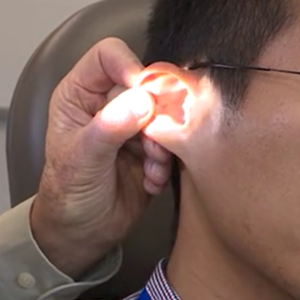
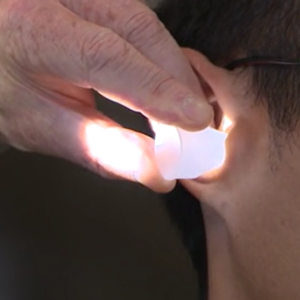
Once the canal has been appropriately straightened, a speculum can then be used to help maintain access and provide a stable pathway for visualisation and instrumentation. Dr Rombout emphasises that, the ear canal is positioned and straightened before introducing a speculum.
Why Shouldn’t the Speculum Be Used to Straighten the Canal?
A speculum is intended to provide access and maintain an appropriate view of the ear canal and should not be relied upon to forcefully straighten the canal.
This distinction is particularly important because the ear canal contains sensitive anatomy, including the bony portion of the canal, where the skin is thin and closely associated with the underlying bone.
Dr Rombout’s approach is therefore to gently position the external ear first, rather than using the speculum itself to manipulate or straighten the canal.
The principle is simple:
Straighten first → Speculum second → Visualise and work
This approach allows the clinician to establish the desired canal position before introducing an instrument that occupies the canal.
The exact positioning and degree of movement will depend on the individual patient’s anatomy and the clinical situation. The technique should therefore be adapted to the patient rather than applied as a rigid movement.
Why Does Ear Canal Access Matter?
Good access can make it easier to maintain a clear view of the area being treated.
When the canal is appropriately positioned, the clinician can work with a more direct visual pathway and better understand the relationship between the instrument and the structures within the canal.
This becomes particularly relevant when removing ear wax, where the clinician needs to continuously visualise the working area while controlling the microsuction tube or curette (wax ring).
Straightening the Canal and Direct Visualisation
Ear canal positioning is closely connected to the visualisation principles discussed in the earlier episodes of this series.
Episode 1 introduced three key considerations:
Vision → Access → Control
Episode 2 explored why binocular vision and depth perception matter.
Episode 3 brings the second part of that sequence into focus: access and safety.
Straightening the canal helps create a clearer visual pathway, while direct binocular vision allows the clinician to maintain a three-dimensional view of the working area.
Together, these considerations can support the clinician’s ability to coordinate vision, hand position and instrument movement.
Continue the Series
Previously:
Episode 1: Three key success factors for Ear Wax Removal
Episode 2: Why Binocular Vision and Depth Perception Matter for Ear Wax Removal
Next:
Episode 4: Why Anchoring to the Patient is Critical for Safe Ear Wax Removal
In the meantime you can follow these links for more information in relation to Direct Binocular Vision and Microsuction solutions for cerumen management.